Romanticism in literature
Eugene OneginRomanticism in literature functions in the novel as both a source of imaginative aspiration and a set of inherited poses that shape how characters read themselves. The poet’s youthful heart seeks glory, and his harp has rung beneath the sky where Goethe and Schiller sang; at the altar of their fame, he kindles his poetic flame. Yet the same literary inheritance reaches Tattiana Larina through novels that furnish her with ready-made heroes and heroines. The contrast matters: Romanticism is not merely a period style but a force that teaches people what desire, virtue, rebellion, and selfhood are supposed to look like, even as the narrator exposes the gap between literary ideals and lived character.
Poetic Inheritance and the Pursuit of Glory
The account of poetic formation presents literary ambition as an act of inheritance. The young poet desires the path leading to glory, and his harp sounds in a landscape already marked by Goethe and Schiller. Their names stand as predecessors whose fame has become an altar: the poet does not create in isolation, but kindles his own flame from an established tradition. This image gives Romantic aspiration a double character. It is personal in its hunger for distinction, yet dependent on earlier voices that define what poetic greatness can mean.
The movement from the desire for glory to the invocation of revered poets also places literary ambition within a history of imitation and transformation. The young poet’s flame is genuinely his, but its ignition is described through homage. Romanticism thus appears as a tradition sustained by acts of reading and emulation, not simply as spontaneous individual feeling. The passage leaves the tension intact: the poet seeks his own goal while standing beneath a sky already inhabited by celebrated predecessors.
Tattiana’s Reading and Imagined Selves
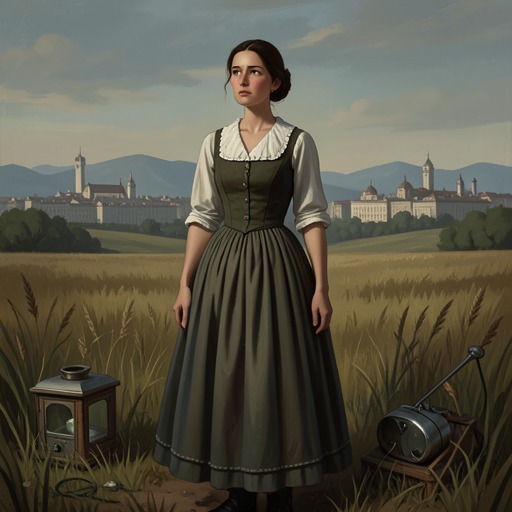
Tattiana Larina reads the novel with eager interest and avidity, and the narrator names the romances that populate her imaginative world. Their heroes include the swain of Julia Wolmar, Malek Adel, De Linar, and Werther, the rebellious martyr. These figures are not interchangeable decorations: the list gathers different romantic roles, from the devoted lover to the defiant sufferer, and shows the variety of models available to a reader learning to imagine a life through fiction.
That reading becomes a form of self-projection. Tattiana dreams of herself as the heroine of the romances she prefers, among them Clarissa, Julia, and Delphine. The novels do more than occupy her attention; they supply roles through which she can conceive of her own emotional identity. The passage therefore makes literary influence concrete without claiming that Tattiana simply copies any single heroine. She inhabits a library of possibilities, and her inward life takes shape in dialogue with fictional women and the plots attached to them.
The gendered structure of this reading is significant. Tattiana is shown encountering stories as a reader and imagining herself as a heroine, while the poetic tradition of Goethe, Schiller, and Byron is presented through male authors and male figures of fame. The evidence does not suggest that her reading is only passive: the act of imagining herself in these roles gives her an interior imaginative life. At the same time, the romances offer forms already authored by others, so that her self-conception develops through the conventions those books make available.
Virtue, Vice, and the Changing Romance
The narrator sets older and newer modes of romance against one another. In the earlier, magniloquent style, authors represented heroes filled with sacred fire. The contrast that follows is sharper than a simple change in taste: in the newer romances, virtue acts like a narcotic, while vice is glorified and triumphs in the erotic career. The language turns literary fashion into a moral diagnosis. Stories that once elevated virtue now seem to dull the mind with it, while transgression supplies the energy and appeal of the plot.
The passage also describes the effect of these books on their young readers. The monsters of the British Muse deprive schoolgirls of repose, and the objects of their adoration include The Eternal Jew, the Corsair, and the mysterious Sbogar. These are named as figures of fascination, not as evidence that every reader responds identically. But the juxtaposition conveys the pattern the narrator is examining: schoolgirl attention is drawn toward mysterious, dangerous, or rebellious male figures, while the old language of sacred virtue has lost its hold.
This critique does not erase the attraction of the romantic imagination. The language of fire, heroic rebellion, and mysterious figures registers the emotional intensity these works command even as the narrator mocks their moral direction. Romanticism is thus treated as culturally powerful precisely because it can make transgression compelling. The reader’s absorption and the narrator’s skepticism coexist: the books captivate, but the terms of their captivation invite scrutiny.
Byron and the Romantic Cloak
Byron supplies the clearest example of the tradition’s ability to turn an unattractive quality into an alluring literary shape. His capricious fantasy can drape even hopeless egoism in a romantic mantle. The metaphor is pointed: romanticism is clothing, a visible style that can dignify or disguise what lies beneath it. The passage does not deny the power of Byron’s imagination; it identifies that power as capable of aesthetic transformation, including the transformation of self-absorption into a form that appears grand or tragic.
The image also gathers the article’s central contrast into a single gesture. The young poet’s flame is kindled at the altar of earlier fame, and Tattiana imagines herself through the heroines and heroes she reads; in each case, literary models shape desire and identity. But the narrator asks the reader to distinguish inspiration from disguise. A romantic mantle may carry genuine poetic force, yet it can also make egoism look like an ideal. Romanticism in literature is therefore presented as both an inheritance that awakens ambition and a convention whose glamour can conceal the limitations of the self it celebrates.